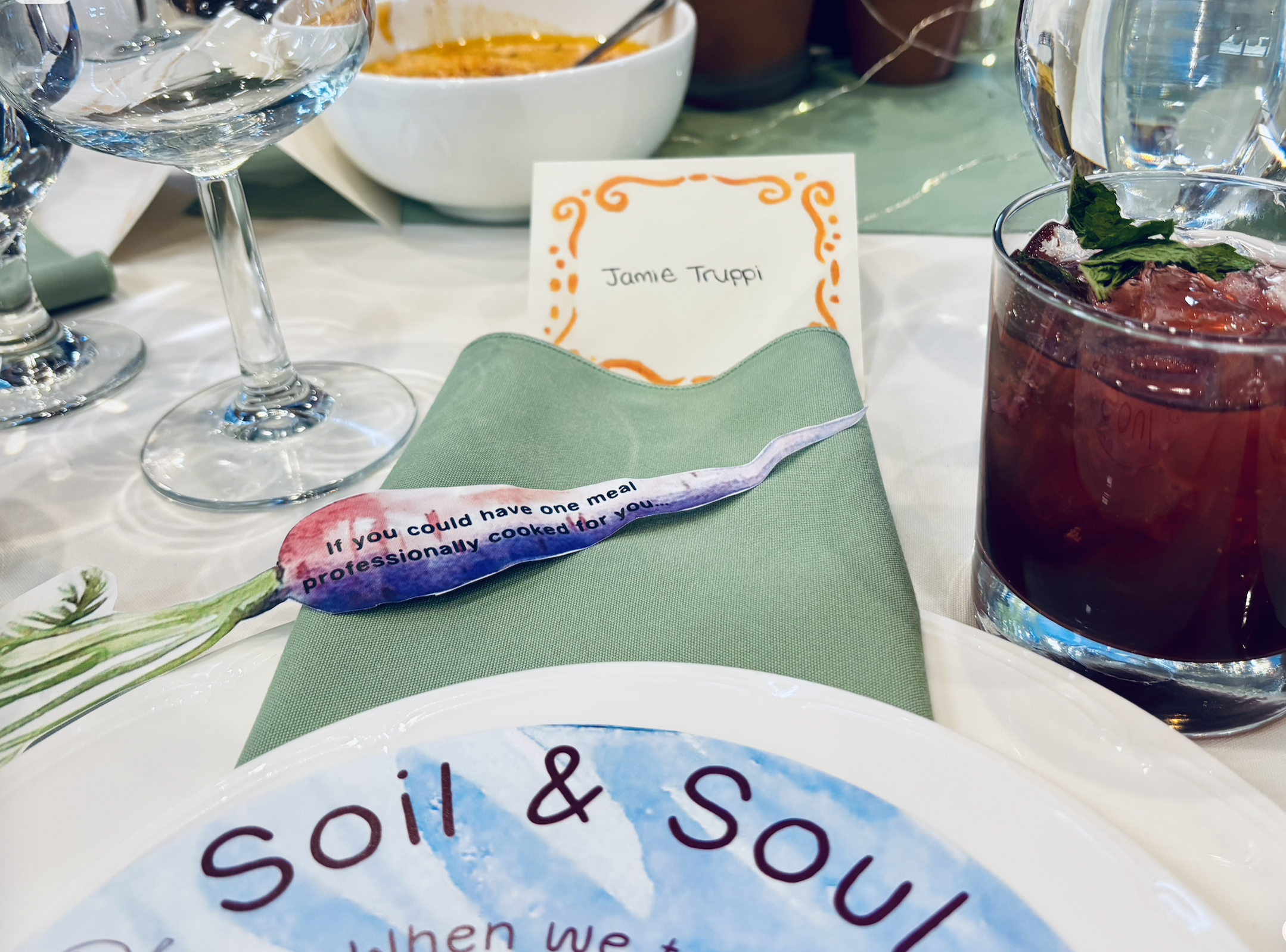
Being intentional matters: Reflections from The Sage School’s feast, “Soil & Soul”

Being intentional matters: Reflections from The Sage School’s feast, “Soil & Soul”

Admittedly, one of the reasons I wanted my children to attend The Sage School is because of their year-long focus on the American food system in the upper grades. It may seem a selfish reason, considering I’m a nutritionist, foodie and local food system advocate, yet I believe it’s one of the most important areas of study, addressing political, environmental, nutritional, cultural, social and economic issues locally and globally. Plus, it’s not a subject taught in traditional public schools, so who’s going to save the world if no one studies this vast and complicated topic and, subsequently, impart their enthusiasm for change unto the greater world?

Read More

The birth of the USDA organic label & why growing organic food is important

The birth of the USDA organic label & why growing organic food is important

With so much activity at the federal level trying to protect pesticide companies and opposition from MAHA and the public to protect people from pesticides, it’s an exciting time to talk about contaminants in our food. Of course, I talk about this every day and have received countless eyerolls over the years from friends and family for my choices to buy organic food or, heaven forbid, decline conventional food at a potluck. My former in-laws actually banned me from saying the “O” word (“organic”—not orgasm) in their home. They, and incalculable others, believe USDA organic labeling is a joke played on gullible foodies and environmentalists like me to garnish my hard-earned money—and that conventional food is totally fine.

Are we still really debating whether conventional American food is safe to eat?

Read More

Glyphosate, grassroots and the power of small choices.

Glyphosate, grassroots and the power of small choices.

As I write this on Monday, April 27, 2026, the Supreme Court is considering a case that could quietly reshape the future of our food system: Monsanto (Bayer) v. Durnell. At its core, the case asks a deceptively simple question: Can a state require warning labels on pesticides if those warnings differ from federal guidance?

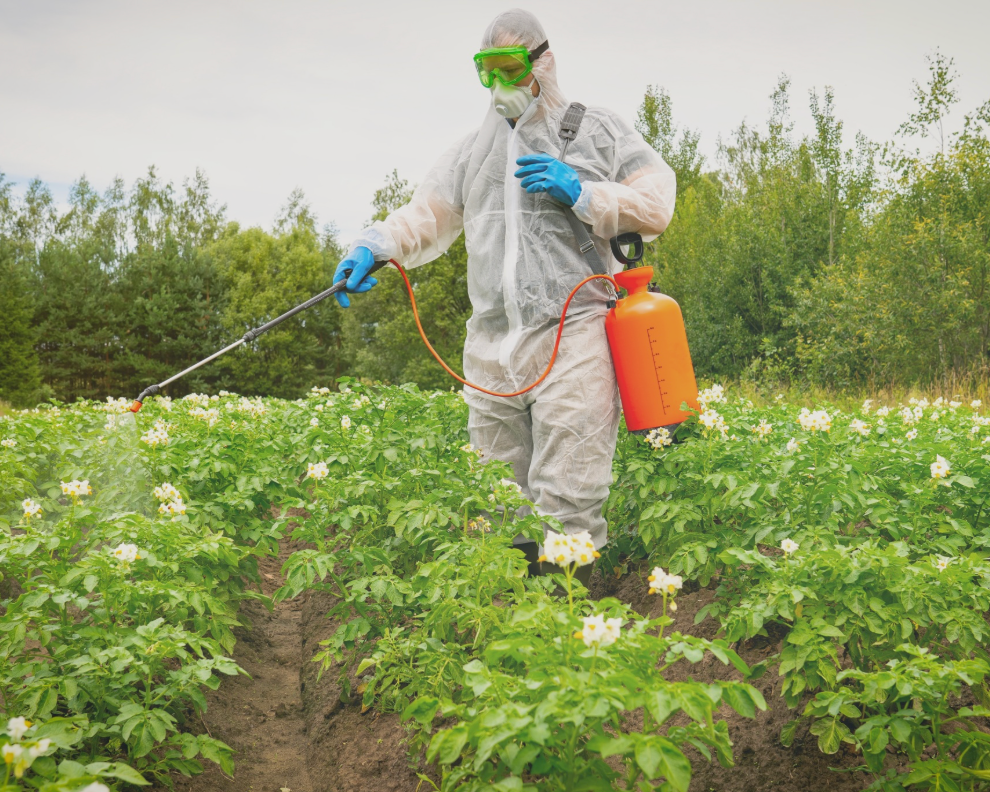
The Environmental Protection Agency (EPA), which regulates pesticide labeling in the U.S., does not classify glyphosate—the most widely used herbicide in the world—as a carcinogen (1, 2). Based on that position, Bayer argues it should not have been required to pay $1.25 million to the plaintiff, Durnell, who developed non-Hodgkin lymphoma and claimed he was not adequately warned under Missouri law (3).

Durnell’s argument is equally straightforward: he deserved to know the potential risks.

Read More

Psychedelics: A catalyst for food consciousness

Psychedelics: A catalyst for food consciousness

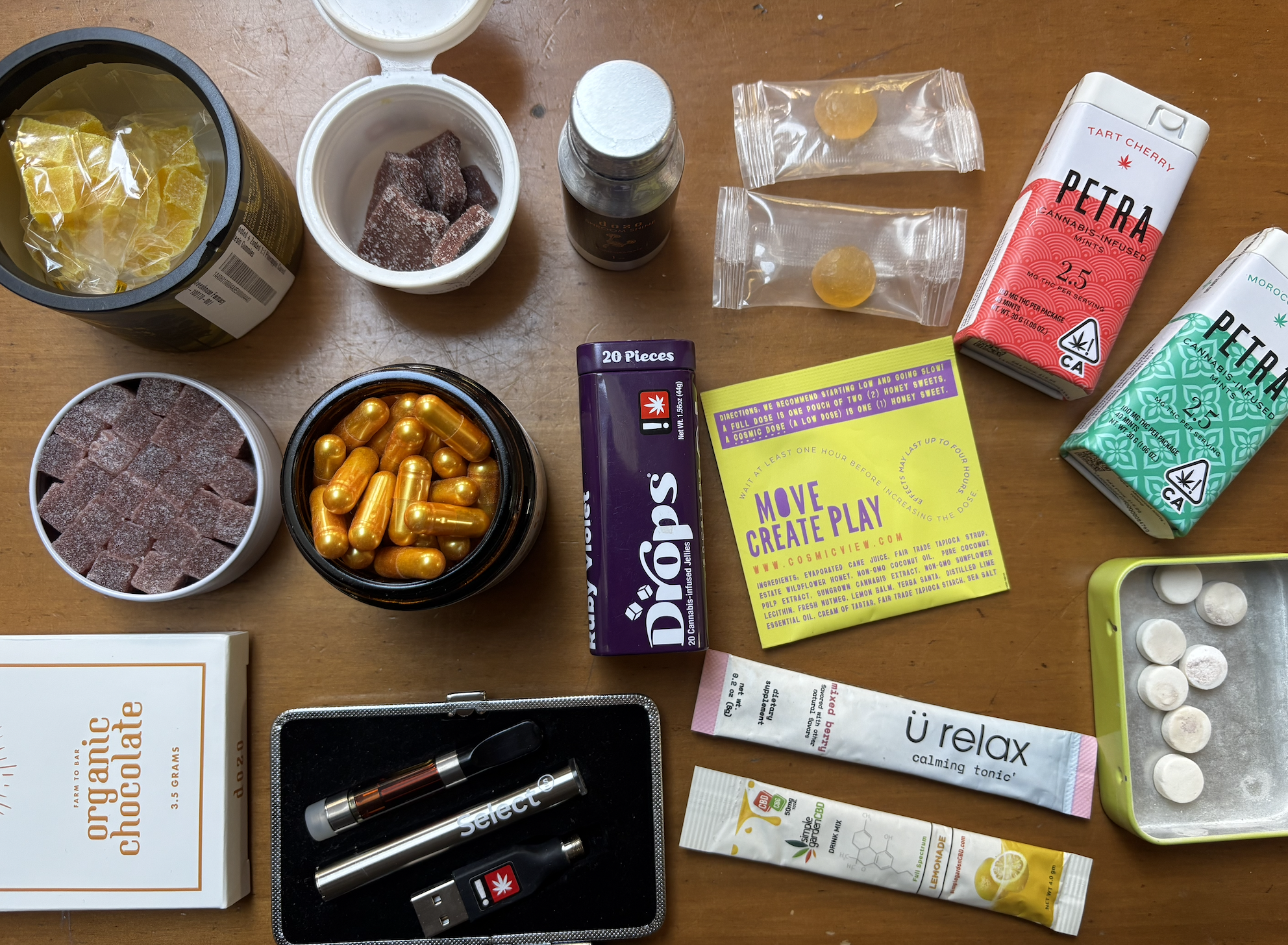
In celebration of my favorite day of the year, April 20 (4/20) I decided to write about Cannabis, plant-medicines and psychedelics (and save the exciting topic of glyphosate for next week). After sharing this inspiration, I surprised by two things: 1.) Not everyone knows the significance of 420. (In cannabis culture, “420” is slang for smoking pot – aka, marijuana, for those who don’t know – paying homage to the code word the time of day when five California high school buddies met after school to smoke weed.) (1). 2.) On April 18, our president signed an executive order to accelerate medical research on psychedelic substances (2). Impeccable timing! 

At the core of my work is food consciousness and healing, so it makes sense to relate food and wellbeing to consciousness medicine.

Read More

Toxins bind to fats, how that affects our health + 12 ways to reduce contaminant impact.

Toxins bind to fats, how that affects our health + 12 ways to reduce contaminant impact.

As I wrote last week’s article about dietary fats and why we need them, my moral compass was nagging me about something I did not address: dietary fats as a hidden source of toxicants. Whenever I guide about food and nutrition, my conscience urges me to say, “Ensure it’s uncontaminated…” – despite knowing everything is contaminated. Whether discussing fish, yogurt, tofu, wheat or spinach, I recommend, “Buy the best quality you can afford…” – despite knowing “quality” is subjective.

Taking accountability for diet and lifestyle is vital, so it’s important to understand the role of environmental contaminants in our food system, how they wreak havoc in our bodies and, especially, their detrimental role on our endocrine system.

Read More

The truth about dietary fats and why we need plenty of them.

The truth about dietary fats and why we need plenty of them.

Did y’all eat ample colored, hard-boiled eggs over Easter weekend? Perhaps an omelet, frittata, quiche or, as in my home, soft-boiled eggs? I’m a big fan of eggs – pasture raised, ideally. I’ve taught classes on eggs and, as you may imagine, I’m often asked for my “opinion” on eggs. Concerned less about humane conditions or quality, questions are fats. Are they “good” to eat? What about cholesterol? Will they make me fat?

Read More

Why road trip food sucks & what to do about it.

Why road trip food sucks & what to do about it.

I’m particular about quality food and I know there is good food in a lot of places. However, it's increasingly disappointing that road trip food is so terrible, reflecting the fact that typical American food is terrible. Considering road-trips are a common way of traveling the US, I cannot fathom why every gas station offers the same, crappy food-like substances and sugary beverages: chips, candy, hot dogs, energy drinks. Cheap. Ultra-processed. Wrapped in plastic. Occasionally, a banana or apple sits near the cash register. What’s worse are fast food options inside gas stations or next door – the food making Americans sick.

Read More

Wyld and Wilder: Saturated fats and dairy and raw milk! (Oh, my!)

Wyld and Wilder: Saturated fats and dairy and raw milk! (Oh, my!)

It was Sunday morning and I was up before 6:00 to prepare breakfast for my son before his last hockey camp practice. My mind pulsed with organizational details – get myself caffeinated, the kids fed, our things packed up and be on the road on time. My body reverberated after two days of city life, concrete and chaos – driving back and forth to the hockey rink a whopping 8 times while in Boise, visiting box stores and grocery stores, navigating traffic and timetables. My emotions drained after recurring arguments with my kids, begging me to take them to In-N-Out Burger, knowing I would not. We had to escape the temptations of the city.

Read More

Ferments: What are they, why are the important and how do we eat them?

Ferments: What are they, why are the important and how do we eat them?

When I entered graduate school, I had a vision of helping people heal using natural, whole foods. Over the past decade while practicing nutrition, I’ve learned that sometimes supplements are necessary, yet we cannot overlook the benefits of certain healing foods. Michael Pollen attempted to simplify human consumption for wellbeing: “Eat food, not too much, mostly plants.” I agree, and would clarify further from a nutritionist, locavore and Earth-mama perspective: “Eat whole, uncontaminated foods raised close to home – and ferments.”

Read More

Can the American Food System help the human microbiome thrive?

Can the American Food System help the human microbiome thrive?

The Sage School’s 10th and 11th grade students, known as the “Raven Band”, are studying American Food Systems. The year-long project will culminate with a community feast organized and designed by the students based on what they’ve learned from conventional and small farming. They are just beginning to build their menu, offering local foods available in spring from farms they visited last fall – plus the sauerkraut we made in class on Monday. 

To begin, I asked the students what they believe is working well within America’s food system. There was a lull.

Read More

Disconnecting from the world is good for your health.

Disconnecting from the world is good for your health.

Last week, a few girlfriends and I packed up our skis and poles, snowshoes and backpacks, suits and towels, food and beverages, oracle cards and a flowery tablecloth and drove north. A few miles from civilization, we passed through a vortex, where rain turned to snow, the narrow valley stretched into a wider expanse and cell service ceased. We placed our phones in the side doors of the car, dialed into some sweet folk music, and settled into our breath, bodies and the view of freshly dusted Boulder White Cloud mountains. Our overnighter to celebrate my birthday was more than just a mini getaway – we needed to disconnect.

Read More

What the Year of the Fire Horse means for our health and nutrition.

What the Year of the Fire Horse means for our health and nutrition.

I’ve always been told I have “fiery” energy – and not always in a positive light. I’ve been riddled and shamed for my passionate expressions and also thanked for wearing my heart on my sleeve. Last week we said goodbye to the Chinese Year of the Wood Snake and hello to the Year of the Fire Horse. What does that mean? Why should we care? And how does that relate to wellbeing? In short, everything is regulated by the cosmos – all that exists in the orderly universe, from space and time, matter and energy and, therefore, the nature of all things. It’s wise to pay attention and, when we do, we have one more tool for making informed choices.

Read More

Boise’s Field to Fork Festival: Reflections from an local food idealist

Boise’s Field to Fork Festival: Reflections from an local food idealist

Last Wednesday evening I walked solo into the Basque Cultural Center in Boise to meet people like me, who support and advocate for small farms, artisan foods and beverage makers and independent producers in Idaho’s food system. Donning my second-hand outfit from various Idaho festivals – snakeskin cowboy boots, a patchwork dress and a cropped jean jacket – I wondered who I’d encounter and whether I’d fit in. In some ways, I did – I’m an Idahoan with reverence for our state’s “heritage, history, and tradition(s),” in alignment with FARE’s mission. In other ways, I was a real food idealist.

Read More

Is the Standard American Diet really making us sick?

Is the Standard American Diet really making us sick?

In my clinical practice and life experiences, I’ve found one thing to be true: the Standard American Diet (SAD) is a destructive industry of excess, convenience and apathy. It’s at the root of chronic diseases, and our medical professionals work hard to diagnose and prescribe medications for diseases that are preventable with a different diet – a more natural diet. If you’re thinking we need a different lifestyle, too, you’re right. Consuming foods we were designed to eat will, inevitably, change a person’s lifestyle.

What is the Standard American Diet (SAD), anyway? Simply look around at food options that are “standard” across our country, advertising our culture of distractions, accessibility, affordability and prioritizing business over wellbeing.

Read More

Privilege and power: How the Dietary Guidelines represent America

Privilege and power: How the Dietary Guidelines represent America

A couple of weeks ago, a man I don’t know told me my food comments showed my privilege. He dissected one Facebook video, my off-the-cuff clip which, on that particular day, described my simple lunch made of organic greens, leftover roasted beets, canned mackerel, walnuts, feta and a homemade dressing. He chided that even organic food contains pesticides (often true) which are more carcinogenic than conventional pesticides (yet provided no evidence). I was annoyed, taken aback, felt misjudged. I wanted to be angry, but one of the gifts of social media is that I don’t have to re-engage. So, I didn’t.

Over the next few days, I contemplated the perspective of this human from who-knows-where.

Read More

Are animal- or plant-based proteins healthier - for us and Earth?

Are animal- or plant-based proteins healthier - for us and Earth?

It’s hard to talk about clean food, optimal nutrients, modern American farming practices or discussions about the updated Dietary Guidelines for Americans (DGAs) when what’s really on my mind is this messy life. Between washing stinky hockey gear and shuttling kids to the only kind of ICE combat I support, I catch glimpses on social media of people dying, suffering, protesting, rallying.

Read More

An Earth-focused perspective on the new Dietary Guidelines for America

An Earth-focused perspective on the new Dietary Guidelines for America

For years I’ve watched friends, colleagues and community members speak up about world events, advocate for human rights and publicly uphold their values. Their efforts have sent supplies to Gaza, amended national health policies and rallied people around local change. But I grew cautious about my voice, having been ostracized, judged and shamed for speaking my truth and questioning the norm. Weary, I disconnected from most political conversations and stopped reading the news. These decisions calmed my nervous system, allowing me to exert my energy toward a different kind of revolution, something softer and useful: inspiring people to cultivate food consciousness.

Read More

This message is clear: Eat Real Food. Why are people debating this recommendation?

This message is clear: Eat Real Food. Why are people debating this recommendation?

Last week, the US Department of Health and Human Services in collaboration with the Department of Agriculture released the updated food pyramid, a visual representation of the Dietary Guidelines for Americans for 2025-2030. It’s an inverted pyramid, seemingly resembling a slice of pizza or pie. Yet the image contains no ultra-processed, convenience or fast foods – only whole foods and a few minimally processed foods like olive oil and yogurt. The message at the top reads: Eat Real Food.

To me, this is a breath of fresh air! Finally, it makes sense from a functional nutrition – and human evolution – perspective. When I shared my hope for the future of our country’s health on a Facebook post showing this image with a description of the guidelines, I received judgmental, accusatory feedback.

Read More

Resourcing vs. resolution-setting.

Resourcing vs. resolution-setting.

On the last day of 2025, the manager at my bank said, “I have to ask the all-important question: What’s your New Year’s resolution?” I was caught off guard – I haven’t made a resolution in years. Resolutions have never worked for me, and I’ve spent ample effort understanding why. I try not to get caught up in the tradition of resolution and, instead, consider January a time to review, reflect, and revise. By the Chinese New Year, I’m working on a plan with resources to help me execute it.

January seems like the most inopportune time to start something new! To make a declaration in the aftermath of the holiday spirit high is setting ourselves up for failure. Often, in our revelry, we decide to change of fix about our lives, yet by a few weeks into the month we have no clear path forward. Our willpower has faded. We lack discipline. We disappoint ourselves. 

Read More

Commitment issues? Here’s why + what to do about it.

Commitment issues? Here’s why + what to do about it.

I’m one of those people who overcommits to certain things and half-ass commits to others. The patterns are overcommitment to working and to other people’s needs/wants and finding excuses for erratic behaviors that could (if committed) improve myself in personal development, athletic goals, financial planning, career goals, and the like. I have become very committed to my health and wellbeing, a feat that has taken years, if not decades, by forming new habits that help me feel good. It’s time again to reevaluate and recommit.

Read More